Showing posts with label books. Show all posts

Thursday, January 6, 2011

Books I've Read: December

2666 by Roberto Bolano. See previous post. Man, what a tome.

Oryx and Crake by Margaret Atwood. This is the first Atwood I've read, and I enjoyed it. It's literary fiction and science fiction in equal measures, and tells the story of one of the last surviving human beings as he remembers the events leading up to the biologically-engineered apocalypse. It's also a fun satire of corporate responsibility, technology, and what happens when we think we're above human failings. There are a few points where Atwood gets carried away with the satire and derails the story for a few pages to make a point about Starbucks or video games or whatever is on her mind, but generally this was excellent, and I recommend it. There's a sequel too, called The Year of the Flood, that I want to check out at some point.

Straight Man by Richard Russo. A novel set in an English department. It's pretty slapsticky, very witty, and always funny, and it manages to make riveting, hilarious reading out of personnel hiring committees and budget cuts. This is my second Russo novel (I've also read Empire Falls), and it's by far my favorite. Highly recommended!

The Stars My Destination by Alfred Bester. This much-loved sci-fi novel was published in 1956, and in some ways it shows it. For example, it opens with a long expository prologue that explains the history of the world and some of the ideas at play, something not many sci-fi writers would try nowadays. The pacing has a distinctly retro feel--some parts feel like Bester was really taking his time, others feel like he had a deadline and needed to get the job done. Some of the perspective shifts and how they're accomplished/developed feel a little amateurish by today's standards. In other ways, the novel feels very modern. Nothing ages faster than sci-fi (try reading some early William Gibson now that it's 2011), but The Stars My Destination feels timeless. It's action, comic-booky science, and depiction of scary corporate interests feel like they could have come from the '70s or '90s or 2000s just as easily as the '50s. And the main character! Damn! Gully Foyle is a great anti-hero, one of the most fascinating characters I've seen in a sci-fi novel. He's violent, stupid, uneducated, and a murder and rapist, and Bester does some really interesting things with him by the end of the novel. Did I mention that the book is full of intrigue and action? At times it feels like a science-fiction version of a good James Bond movie. I'm very glad I read this one--it was really interesting.

The Big Sleep by Raymond Chandler. More classic genre fiction. I own an anthology of old pulp detective stories and I'd read stuff by Mickey Spillane and Dashiell Hammett and not really liked it much, so I was leery of The Big Sleep. And then I read the first paragraph:
It was about eleven o'clock in the morning, mid October, with the sun not shining and a look of hard wet rain in the clearness of the foothills. I was wearing my powder-blue suit, with dark blue shirt, tie and display handkerchief, black brogues, black wool socks with dark blue clocks on them. I was neat, clean, shaved and sober, and I didn't care who knew it. I was everything the well-dressed private detective ought to be. I was calling on four million dollars.
BOOM! The language throughout The Big Sleep is similarly amazing, and it elevates what would be an exciting but rather conventional detective story into literature. People are starting to reevaluate Chandler and accept him as one of the great American stylists and I can see why. Gorgeous writing.

Thursday, December 16, 2010

I'm Still a Bad Blogger

But I'm home! And, two nights ago, I finished 2666, which Jeff and Selena gave me to read before I left for New Hampshire in the summer, and which I have been reading for four freaking months.

Now, of course, I have school, I have student papers, I have writing to do, but still. Four months? For one book? Ah, but what a book--it's almost a thousand pages, many of which have no paragraph breaks. Sentences will run on for pages, it's often experimental and surreal, cast of thousands, etc. Plot summary is futile.


I'm not sure if I can recommend 2666. While it was a damn good book, in the time I took to read it I could have read at least four or five other damn good books, without the pressure of a punishing 900-page slog. It's super-dark, confusing, often very disturbing (I had creepy 2666-infected dreams at least twice), and not at all rewarding in a plotty sense. But oh man, the language, the images, the dozens of fantastic dream sequences... If you're really into Latin American lit, or you're looking for a summer project and you've already read Proust and Infinite Jest and you're moving onto the next behemoth, give it a shot. Just don't try to do it during grad school.

Tuesday, August 3, 2010

Books I've Read: July

The Story Thief by Joshua Young. Yeeeeeaaah! It's Josh's book, and I'll say little about it to prevent from spoiling it for all of you, dear readers, or from embarrassing its author. I will say that I loved it, and that it's not only Josh's prolificity (prolificness? prolificiness? I don't know, he freaking writes a lot) that drives me mad with envy, it's also his willingness to cut what he's revising to shreds and rebuild it, expand it, tweak it, and generally turn it from a solid first draft into an actual novel. Nice!

High Fidelity by Nick Hornby. I picked this up because Jeff and Selena and I were talking about it and I haven't read it since high school and I wanted to see how I would react to it now. Strongly, it turned out. Bear with my huge, sweeping generalizations here: reactions to High Fidelity are pretty strongly divided along gender lines. Women often are bothered by it--Rob, the narrator is neurotic and whiny, the book is a find-the-right-woman-who-will-fix-you fantasy, who gives a shit about all those old soul records, etc. One WWU student I talked to actually had to get rid of the book because she said that having it on her night stand felt like "having a sketchy stranger in her room." Most men (and bear in mind that most men who have reactions to the novel High Fidelity are the kind of guys who seek the book out to read it) think that it is an incredibly accurate representation of the male mind at work. Jeff, in response to Selena's comment that Rob is whiny and neurotic, replied that yes, Rob is whiny and neurotic, but he gives voice to neuroticisms that most guys think about but would never in a million years actually talk about, which I think is a good way to describe it.

I was really torn by High Fidelity, and it's narrator especially. It is a find-the-right-woman-who-will-fix-you fantasy, and the last quarter of the book is mostly about Rob bumbling around and being a douchebag while Laura (the love interest) patiently tries to put his life together for him. Rob definitely doesn't earn points for likability. He's a self-consciously hip narcissistic hypocrite who sees the problems in his behavior and lets it eat at him, then does nothing whatsoever to change it. Unfortunately, Rob is also so similar to me that it's shocking. He's an A.V. nerd, like me and most of my male friends, and if he developed an obsession with twenty-year-old video games, we would probably be besties. This was upsetting for me to realize--I wanted to hate Rob, but I didn't. I couldn't! This needs more thinking about...

Scott Pilgrim's Finest Hour by Bryan Lee O'Malley. Several people have asked me why I like these books and I have had a hard time explaining why--the plot sounds gimmicky and infantile, the art style is highly stylized (it appeals to me, but I can see how it would drive some people insane), and the narrator's comments often start to feel a bit dictatorial. But then I noticed the blurb on the back of the last book, from Joss Whedon: "Scott Pilgrim is the best book ever. It is the chronicle of our time. With Kung Fu, so, yeah: perfect." Word Joss Whedon! Basically the fact that Joss Whedon is blurbing this book should tell you why I like it--he could have written it. It has that same mix of angst and pop-culture references and ass-kicking that made Buffy the Vampire Slayer so awesome. In fact, now that I'm thinking about it, it's a lot like Buffy. Huh. Anyway, I was actually a bit disappointed with the ending of the Scott Pilgrim series. I'm not sure what I expected--it ended exactly how anybody could have predicted it would end all along--but it just felt a little too... easy? Not earth-shatteringly awesome? I'm not sure.

The Rachel Papers by Martin Amis. Ah! A male-coming-of-age novel with a narrator I can really love to hate. The Rachel Papers takes place in the five hours before Charles Highway turns twenty years old. He spends those five hours recounting the previous year or so of his life, with special emphasis on his relationship with Rachel, a girl he sets out to bed but with whom he winds up falling in love. Charles Highway is arrogant, manipulative, hypocritical, elitist, callous, disgusting on pretty much every level (including and especially the level of personal hygiene, his lack of which he spends a great deal of time describing), and is just an all around asshole. There's really nothing good to be said about him, at any point in the novel. That said, I didn't have to like the narrator to enjoy the novel. It was very funny, and much of the pleasure I got from it came from seeing what the hell Charles was going to do next--his willingness to tailor his musical tastes, conversational modes, and even his accent to suit the various women he tries to pick up is rather funny, and the used condom switcheroo is a great moment.

Yes, "the used condom switcheroo." This book is freaking filthy. I honestly have never read anything so crass. I'm trying to think of a good analog to help explain it, since--as my family reads this blog--there's no way in hell I'm going to quote some of it's more filthy passages (many of which run on literally for pages), but I'm having trouble finding one that's adequate. I guess it reminded me a bit of a British novel version of American Pie, only much, much, much raunchier and willing to describe the gritty details of... well, of just about everything that American Pie can only hint at if it wants to keep its 'R' rating. Its several pages dedicated to the symptoms of Charles bad case of gonorrhea were particularly memorable, and terrifying, and I also wondered how many different ways Martin Amis--who is, by the way, a very well-respected, very British novelist--could think of to describe bronchitic phlegm. Yeah, ick, ick, ick. I enjoyed the book, but if you're easily offended or disgusted or embarrassed, this is not the book for you.

Olive Kitteridge by Elizabeth Strout. This is a book my professors and classmates were raving about all last year and one that I wasn't that interested in. Old people? Stories about grief? Small town life on the coast of Maine? It just didn't seem like there was a lot there that appealed to me. But man am I glad I read this book. It's solidly written and very compelling, and I love how Strout handles Olive. The book is composed of thirteen short stories that all share a setting and a character--cantankerous middle school math teacher Olive Kitteridge. Sometimes Olive is the focus of the story, sometimes she only passes through a scene or gets a mention, but she's always there. Olive is a fascinating character, and I was never sure whether to hate her for her domineering pushiness and cold passive aggression, or love her for her ability to push through all the horrible things that life piles in front of her (or sometimes, like in one of my favorite stories, "Security," love and hate her in great measures, at the same time). The book is definitely a downer, but it's worth it.

Everything Ravaged, Everything Burned by Wells Tower. Maybe it's that I came to this short story collection after Olive Kitteridge, which puts its emotions right up front, but Everything Ravaged, Everything Burned bothered me. Wells Tower's name and some of his more successful short stories (like "Retreat," which I read here and in the Pushcart Prize anthology a few years ago) get tossed around a lot in writing programs, because he's young (mid-30s), hip, and regularly places work in places like The New Yorker and The Paris Review. Wells Tower also writes like a young, hip dude. I'm curious to see if other MFAers (particularly fiction people) have noticed this, but there seems to be a certain mode that white male writers younger than forty-five tend to fall into. Emotion is hinted at but rarely mentioned outright. Everyone is very, very angry and/or callous. Outright statements of intent or emotion are passed over in favor of oblique images or dialogue. It's all about elision, deferment, and deflection. Think Raymond Carver but more ironic.

This is fine for a while, but after three or four stories in the same style, it gets really tiring. I found myself looking for the huge emotional crescendos in Olive Kitteridge, or the heart-on-your-sleeve angst of Scott Pilgrim. Still, this wasn't a complete waste of time. The title story is excellent, "Retreat," which I mentioned earlier, is flawed but interesting, and "On the Show" gives up Tower's typical narrative structure completely and gives us a collage of workers and guests at a small town carnival that's really, really awesome. Also, this is a good example of what I want not to do in my own writing: reticent white guy lit.

Tuesday, June 29, 2010

Books I've Read: June

Tailchaser's Song by Tad Williams. This is a dorky fantasy novel about talking cats who go on a quest. It was my friend Lindsey's favorite book as a kid, so I read it, and I found myself enjoying it quite a bit. It's like Watership Down with cats, and I do love cats. It also had a fascinatingly down-beat ending. It totally skips the standard fantasy-trope "Everything is all right, here's your reward in the form of a title / a love interest / a big wad of magic or money" ending and goes for something really ambiguous and cool. I won't spoil it in case you ever read it.

Masters of Doom by David Kushner. This is the biography of John Romero and John Carmack that I think I mentioned earlier. It was really interesting, full of cool details of video game development in the early nineties, and a blow-by-blow description of how these two titans of game development fell out (Ion Storm--yikes). I was thinking about this and the Salinger biography, and it's fascinating how often geniuses are douchebags. John Carmack was the worst kind of programmer-nerd--no social skills whatever, he talked like a robot for years just because he thought he could, lived in an empty apartment with a computer and a mattress--and made a habit until his late twenties of just being a dick and generally mistreating people. This guy was also singlehandedly responsible for creating the PC gaming industry in the early 90s. Every single graphical breakthrough came from his brain. Odd how often genius and douchebaggery coincide.

Scott Pilgrim's Precious Little Life, Scott Pilgrim vs. The World, Scott Pilgrim and the Infinite Sadness, Scott Pilgrim Gets it Together, and Scott Pilgrim vs. The Universe by Bryan Lee O'Malley. I had never heard of this series of graphic novels before I saw the trailer for the upcoming movie (which could either be an awesome guilty pleasure or just really, really, really, really bad), and I was intrigued because of how they were supposed to treat video games, anime, and nerd culture--as an integral part of the narrative and visual style. I loved them for their witty banter and jokes about NES and Genesis games that made my childhood nerdiness feel hip. They're quite funny, and total fluff. I read all five books in about seven hours. The sixth comes out in a few weeks, and I intend on parking my ass in a Barnes and Noble and reading the entire thing to find out how it ends. Highly recommended.

The Yiddish Policemen's Union by Michael Chabon. Okay, this one is in progress, but I felt guilty about how little I've read this month, so I'm putting it on here to make myself feel better. This book is crazy! It's set in an alternate history where after World War II, European Jews sheltered in Sitka, Alaska instead of Israel. And it's a Chandler-esque literary crime thriller, full of hard-drinking, fast-shooting, Yarmulke-wearing police detectives and black-hatted, side-curled, corrupt Orthodox Jew crime families. Pretty awesome stuff. I won't say too much about it, since I'm only 2/3 of the way through, but I'm really enjoying it so far, and I know I'm missing out on a ton of awesome stuff because I don't know that much about Judaism. There are whole paragraphs that I just don't get at all, which is kind of too bad.

Josh, you're next.

Friday, June 25, 2010

Nerdosity


Perhaps this summer I have aged backwards and become, once again, a twelve year-old boy. When I was a twelve year-old boy I was a huge nerd, and I am reaching impressive new levels of nerdiness. Ladies and gentlemen, the facts:

  • My friend from college has got me getting back into Magic: The Gathering. Gabe dug up my old cards for me, and I have been building decks and realizing how hopelessly outclassed my cards from the mid-nineties are compared to the new stuff. My creatures stand no chance! As much as I love the game, what I really want to do is buy a booster pack, rip into the foil and smell that vacuum-sealed fresh-ink scent all new Magic cards used to have. It is the smell of my young nerdhood.
  • I have been babysitting Kaylee at Gabe and Amanda's house, which seems to have a never-ending supply of DiGiornio pizza. DiGiornio pizza is my weakness--once I bake one, it is hard for me not to eat the entire thing. I love it, and I have been eating it almost every day for lunch. Turns out when you eat pizza almost every day, you get really greasy. Greasy hair, greasy skin, lots of zits... and yet I can't help myself. DiGiornio truly is the food of the gods. Soon I will be stuffing it into my head--which will be attached to my ginormous blob of a body by a neck the circumference of a five gallon bucket--while I drink Mountain Dew and play World of Warcraft.
  • I'm not at WoW yet (nor will I ever be), but I am enjoying the hell out of Assassin's Creed 2, which, believe it or not, is better than the first one (Holtmeier take note). I play it on Gabe's PS3 when the young ward is sleeping or willing to entertain herself. There's even more great stabby action, and I'm learning a ton about renaissance Italy. It's pretty cool when I can play a video game and nerd out over architecture, art, medieval politics, etc.
  • That same friend who got me back into Magic is exposing me to a bunch of really solid electronica (cheers, Lindsey). I highly recommend Discovery, Jonsi, Passion Pit, and especially Miike Snow. I know electronica isn't really nerdy--it's rather hip at the moment, as far as I can tell--but I can't shake my old techno and electronica stereotypes: ravers, comp-sci students, weird skinny guys who do modtracking and never leave their rooms. Well, the music is damn good anyway.
  • Up until this morning, I have had no car for a while, which means most of my social interactions have been through texting, gchat, and Facebook. Ugh.
  • I am reading a book about John Romero and John Carmack, the two guys who designed and programmed Wolfenstein 3D, Doom, and Quake. It's a fascinating book full of lots of cool details about how video game development worked in the nineties.
Well, that's about it. There are other, non-nerdy ways I'm spending my time, too: taking Kaylee on walks, playing catch with dogs, listening to the Avett Brothers (awesome, Kate!), other stuff. More updates soon!

Sunday, May 30, 2010

Books I've Read: May

I'm into summer now, which means lots of time to read. And oh man, do I have a stack. I've included some thoughts on each book, written as I finished them. Welcome to my longest blog post ever. MWAHAHA.

Hyperion
by Dan Simmons. It's been years and years since I read a big, beefy, science fiction epic, and this one was awesome. Hyperion steals its frame story from Chaucer's Canterbury Tales and gives it a bad-ass sci-fi twist. It's about seven people on a pilgrimage that may or may not determine the fate of humanity, but will almost certainly kill them. What I love best about sci-fi is its ability to explore ideas (pretty much a genre requirement unless you're going Cormac McCarthy's The Road route), and Hyperion has a lot of awesome ideas: a creepy-ass time-traveling God-monster named the Shrike (the subject of the pilgrimage); a colony on a distant planet built by poets, artists, and their benefactor, an old man named Sad King Billy; John Keats brought back to life as an AI; and so, so many more. The book is full of ideas that made me stop and go "Man, I wish I had thought of that first." That said, man this book is not well-written. My expectations are typically lower when I pick up a genre paperback (although they shouldn't be), and Hyperion is way above most similar novels in terms of writing style, but there were some serious tics that bothered me. Dan Simmons usually describes things very well, but he always has to give you a sense of the size. Or not a sense, really, he just tells you how many meters tall/long/deep something is. The shrike is three meters tall, the seas of Maui-Covenant are "hundreds of meters deep," the blades of the Sea of Grass are "two meters tall." I read one paragraph of description where he used the word "meters" fourteen times. FOURTEEN TIMES! He also just doesn't do subtlety. In a way that's good--I was in the mood for a big, candy-colored sci-fi extravaganza, and that's exactly what I got. All in all, I really enjoyed Hyperion, and will be checking out its sequel, Fall of Hyperion, when I get through my current stack. If you're a sci-fi fan especially, Hyperion is required reading. It won the Hugo and the Locus that year, and was shortlisted for the British Science Fiction Award and the Arthur C. Clarke award. Deservedly so.

Franny and Zooey by J.D. Salinger. As a huge fan of Wes Anderson's The Royal Tenenbaums, it's pretty pathetic that I haven't read this book until now. I've read a few of Salinger's short stories featuring the Glass family--which Anderson took as a model for his Tenenbaums--but in this novel (actually, it was originally published as a short story and a novella) the influence is pretty clear: the family of child prodigies, with a history full of disaster, suicide, and disappointment, who live in an eccentrically-decorated Manhattan abode. Sound familiar, Tenenbaum fans? It's amazing how Salinger can make neurotic bickering somehow beautiful. Listen to this passage, in which Zooey reacts to his mother telling him that he makes people nervous and is a bad conversationalist:

Zooey turned full around to look at his mother. He turned around and looked at her, in this instance, in precisely the same way that, at one time or another, in one year or another, all his brothers and sisters (and especially his brothers) had turned around and looked at her. Not just with objective wonder at the rising of a truth, fragmentary or not, up through what often seemed to be an impenetrable mass of prejudices, cliches, and bromides. But with admiration, affection, and, not least, gratitude. And, oddly or no, Mrs. Glass invariably took this "tribute," when it came, in bountiful stride. She would look back with grace and modesty at the son or daughter who had given her the look. She now presented this gracious and modest countenance to Zooey. "You do," she said, without without accusation in her voice. "Neither you nor Buddy know how to talk to people you don't like." She thought it over. "Don't love, really," she amended. And Zooey continued to stand gazing at her, not shaving.
Damn, Salinger. You're my man. While this book is definitely awesome, do not jump into it without first reading Nine Stories. A brief introduction to the Glass family is useful, especially since the main characters of Franny and Zooey so often hide their deep understanding and affection for one another under abrasive witticisms and repetitive, one-sided arguments.

Reality Hunger: A Manifesto by David Shields. This is my summer reading list's concession to the hip and contemporary lit-crit scene. You need some cojones to subtitle your book "A Manifesto," but Shields pulls it off. Writers and academics, this is a must read book. Shields covers a lot of ground in this book, but the basic premise (or at least, what I took from it) is that because our mass-media saturated, internet-mediated consciousnesses are starved for "reality," we are drawn less to fictional work and more to work that presents (or claims to present) reality: memoir, reality television, documentary. Because of this, the novel, the scripted film or television show, the traditional play, etc. have been pushed out of the cultural spotlight. Shields talks especially about the novel, which, as he sees it, hit its peak relevance in the first half of the nineteenth century. Shields argues that these old forms have become so hopelessly mired in convention and genre expectations that they no longer reflect reality in any way--they give us only what we expect out of them. He calls for writers to enliven the novel by drawing on collage, a separation from traditional narrative and methods of characterization, and a kind of hip-hop inspired "sampling" of other works. To this end, about 98% of Reality Hunger is plagiarized from other sources, ranging from Joyce to James Frey to Eminem. Shields includes a note in the back that says Random House wouldn't allow the book to be published without an appendix that attributes the sources. Shields includes the appendix, but tells his readers that he isn't happy about it, that the point is that he shouldn't have to include the appendix, and he encourages his readers to use scissors to remove the offending pages. Through it's odd form and many of its arguments, Reality Hunger implies that we need to reconsider our notions of plagiarism and what is and is not considered original work. Although I disagreed with much of what Shields/his many sources had to say, I really enjoyed this book. I'm only scratching the surface of what Reality Hunger has to offer (I haven't even mentioned the section on the history of hip-hop and how it relates to his argument), so I really recommend you pick it up.

The Mysteries of Pittsburgh by Michael Chabon. After The Amazing Adventures of Kavalier and Clay and the excellent nonfiction collection Maps and Legends, I counted Chabon among my favorite writer. So I was a little embarrassed when I got into a conversation about him with a fellow MFAer and realized that I barely knew the work of the author I claimed to love. So this summer one of my reading projects is to read the entire Chabon back catalog. There are six novels and two short story collections I haven't read. Mysteries of Pittsburgh is his first novel, published back in 1988, and it's definitely first-novelly. There are a lot of ideas and quirky characters and shiny pieces of dialogue, but I felt like it failed to become more than the sum of its parts. I can't say I was really impressed. Skip this one.

Important Artifacts and Personal Property from the Collection of Lenore Doolan and Harold Morris, Including Books, Street Fashion, and Jewelry by Leanne Shapton. After reading Reality Hunger, I got interested in weird structures and fiction that includes chunks of reality. Important Artifacts and... is the chronicle of a relationship, which the reader sees through photographs and descriptions in an auction catalog. I read it in about two hours, and it kind of reminded me of reconnecting with an old friend on Facebook--you try to figure out who they've become by piecing together the evidence in photographs, wall posts, pages they've liked. There's a feeling of voyeurism, and sometimes weird glimpses behind the scenes. Early in the catalog, after Lenore and Harold have met, had a few dates, and exchanged letters and mix CDs, is a description of a handwritten note and envelope:

A note on St. Regis stationary, in Doolan's hand. Reads: "Please join me in room 1045. x L." 8 1/4 x 6 in.
Included in lot is a St. Regis envelope with various inscriptions on the back reading "Come to room 1045" / "Am in room 1045" / "Meet me in room 1045" / "See you in room 1045"
In the accompanying photograph, we can see that the inscriptions on the envelope have all been crossed out. There's a lot of stuff like that in Important Artifacts and..., and in a weird way, these things make the characters feel more real than straightforward prose would, I think. I picked this up because I was considering adopting a similar format (or rather, what I thought was a similar format) for my thesis. Still considering it, but I'm not sure how useful Shapton's book was for me.

Gentlemen of the Road by Michael Chabon. Now this is more like it, Mikey C. His aforementioned nonfiction collection, Maps and Legends, is an appreciation of genre work and literary forms that don't earn the same cred as natural-realist fiction--comic books, sci-fi, mythologies, fantasy, detective stories, etc. Chabon argues that literary fiction would be a lot more entertaining to a lot more people (and would probably sell better) if it learned to play with some of qualities of genre fiction; and genre fiction would be more respectable if their writers used the same kind of no-bullshit cliche detector that literary fiction writers are trained to develop. Gentlemen of the Road is kind of Maps and Legends in practice--a beautifully-written, intelligent, erudite novel about two con men on an adventure in the Caucasus mountains in the tenth century. The sentences are gorgeous, the characters are well developed, and the history is handled exactingly, but the book never forgets that its primarily an adventure novel. There are cliffhangers and narrow escapes, disguises and reversals, and sweet illustrations by the guy who draws the comic "Prince Valiant." It's the most beautiful novel I've read that includes marauding vikings, decapitations, disembowelments, hemp-smoking scallawags, and an elephant that pounds one character into a bloody pulp. It's violent, smart, and really entertaining, and I wish I could build a time machine and give this book to my twelve year-old self. Definitely recommended.

Wonder Boys by Michael Chabon. Back to reality (kind of) with Chabon's follow-up to Mysteries of Pittsburgh. Oh, PS, I'm not reading them in chronological order. Wonder Boys tells the story of the worst weekend of novelist Grady Tripp's life--his wife leaves him, his mistress is pregnant, his twenty-six-hundred page novel-in-progress still isn't finished, his pot addiction is mixing with his anxiety in unhealthy ways, and his editor is about to lose his job. And that's only in the first chapter. Things get much, much bleaker from there. Chabon keeps it light, mostly through Tripp's hilarious, embittered first-person narration--his wit never fails even when everything around him falls apart in ridiculous screwball ways. For me, Grady Tripp is right up there with Holden Caulfield and Humbert Humbert in the ranks of memorable first-person narrators. I don't want to say too much more about this book because I had such a freaking good time finding out how Grady Tripp's horrible three days unfolded and I wouldn't want to ruin it for you, dear reader. Check it out.

Werewolves in their Youth by Michael Chabon. It was weird coming back to short stories after reading so many novels, and I wonder if that didn't color my perception of Werewolves in their Youth. I didn't like this collection, with the exception of a few stories. Not really at all. This was published in 1999, after Chabon was a New York Times Bestseller two times over, and the stories in it were snapped up by the New Yorker, Harper's, and GQ. It was received well, and it comes up fairly often in MFA discussions of good collections. Maybe it's me? Regardless, I just wasn't into it. Chabon gives his readers massive chunks of exposition to contextualize his characters' struggles and seems to make a rule out of telling, not showing. I found myself wondering how some of these stories would be received in a fiction workshop. There were some bright spots, though. The title story is a classic, and "Son of the Wolfman," about a woman who decides to keep her baby conceived by rape, much to her infertile husband's chagrin, was very good. "In the Black Mill," a Lovecraft pastiche, is supposedly written by one of the characters from Wonder Boys, and it's a damn good horror story. The other stories have some good stuff in them, but just didn't do it for me. I'm curious to read his first short story collection, A Model World to see if automatic acceptances into the New Yorker and Playboy made Chabon lazy, or if this is just how he handles short stories.

Racing the Beam by Nick Montfort and Ian Bogost. I picked up Racing the Beam because it relates to my thesis, which spends a little bit of time talking about programming for the Atari 2600. Racing the Beam is kind of a cross between academic critique, industry history, and technical elucidation. It discusses things like the Atari's MOS 6507 processor's relationship to the electron gun in CRTs, and in the same paragraph, it will go all academic and drop some Marshall McLuhan on your ass. What I found most interesting was the information about how early video games were programmed, and how Atari was a "code farm"--programmers responsible for video games that made the company tens of millions of dollars lived on a $20,000 a year salary and received no public or in-house recognition for their work, not even their name in the manual. The technical information will be useful for me, but it was hard to slog through. I can only read so much about assembly language compilers before my brain starts shutting down. Oh, one cool note: the title comes from a slang term that was popular among Atari programmers. Because the Atari only had 128 bytes of RAM (the computer I'm writing this on has about 23.5 million times more memory, ha!), the programmers couldn't store any information for later use. Everything had to be processed on the fly, literally as the electron beam lit up the phosphor on the inside of the television screen, hence their code needed to be fast and tight enough to "race the beam."

In Search of J.D. Salinger by Ian Hamilton. Franny and Zooey got me interested in learning a bit more about Salinger, so I picked up this literary biography. It is excellent, and if you're interested in Salinger, you should read it. I'm going to spoil the end a little bit, which I thought was the most interesting part of the book. Hamilton opens the last chapter by narrating his experience of finishing his Salinger biography (which, he tells his readers, differed greatly from the book we've just read) and sending it off to the publisher, getting galley proofs, doing publicity, etc. Then Salinger sued him for using snippets of his language from his personal letters. Salinger's letters were available in many different libraries and personal collections, unpublished and publicly available, and Hamilton and his publisher thought the court case was a slam dunk. After two years of verdicts, appeals, and counter-appeals, they lost, and Hamilton had to rewrite the book, exorcising material from Salinger's letters from it and emphasizing his conflicted three-part role of Salinger's fan, Salinger's biographer, and Salinger's legal opponent. It's a very interesting read.

So that's it. Those are all the book I read in May. I promise that next time I read a bunch of books in one month I'll keep the notes brief.

Saturday, May 8, 2010

Books I've Read (so far this year)

My professor mentioned that she keeps a book journal, just a list of every book she's read and when she read it. I think this is a great idea, and I'm going to one-up her by posting it on my blog. See anything you like? Comment on it. Recommend something. Let's have a discussion. The plan is to eventually post one of these every one or two months, but as I'm just starting this, I figured I would do everything I've read so far this year (as best I can remember). Unless I say otherwise, you can assume I read it for class. Here goes...

January


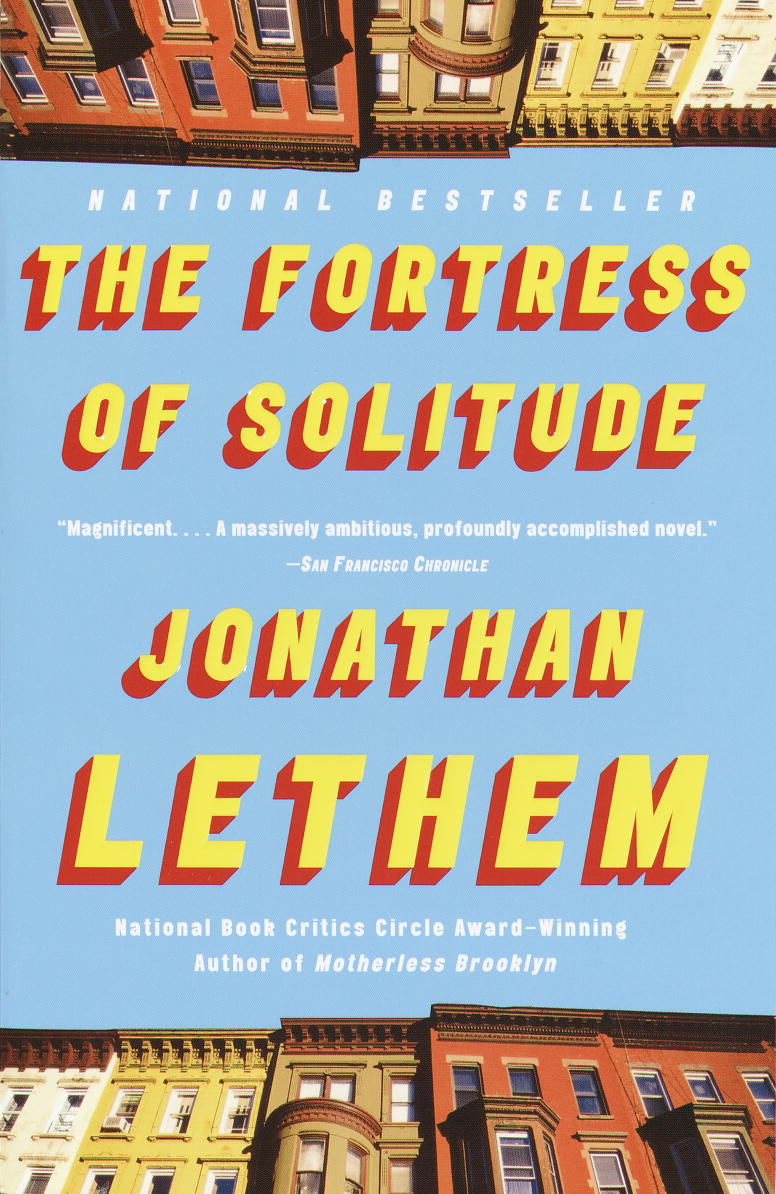
  • Fortress of Solitude, by Jonathan Lethem. Read it for fun. Epic, difficult, and odd. Totally worth it.
  • How I Became a Famous Novelist, by Steve Hely. Read it for fun. Very funny satire of book people. Totally nails the scenes set in an MFA.
  • The Shell Collector, by Anthony Doerr. Read two stories out of it for a class last semester, read the rest over the break for fun. Beautiful short story collection. This story is a must read.
February


  • Best American Short Stories 2009, edited by Alice Sebold. Awful selections! Avoid at all costs.
  • Bringing the Devil to his Knees: The Craft of Fiction and the Writing Life, edited by Charles Baxter and Peter Turchi. Didn't read the whole thing, but read a good chunk of the essays within, which were very good.
  • Burning down the House, by Charles Baxter. Several essays assigned for class, then read the rest for fun. Some really interesting observations about how fiction works.

March


  • OnWriting, by Stephen King. I've read this before, but got to revisit it for class. It's by far the best King book I've read. He should do memoir more often.
  • Reading like a Writer, by Francine Prose. Another reread for my form and technique class. An insanely useful book for fiction writers.

April


  • The Faith of the Writer, by Joyce Carol Oates. Hated it.
  • Day Moon, by Jon Anderson. A poetry collection, recommended to me by the inimitable Andrew "Babypoet" Booth. It was alright, but didn't do much for me (sorry, BP).
  • The Woman in the Woods, by Ann Joslin Williams. Read it for fun. My professor's collection of linked short stories. This book filled me with an insane jealousy--I wish I could write short stories like this.
  • The Pearl of Kuwait, by Tom Paine. Read it for fun. My other professor's novel, written from the first-person POV of a stoned California surfer turned US Marine in Operation Desert Storm. Kind of like Bill and Ted's Excellent Adventure in the Middle East, which is to say, awesome.
  • Ron Carlson Writes a Story, by Ron Carlson. Interesting, but I'm not sure if it really helped me all that much.
That's it for full books, although I'm sure I'm forgetting stuff from over the break and from March, which seemed a lot busier than my reading list makes it seem. I've also read several volumes worth of my colleagues' material for my fiction and non-fiction workshops, a folder stuffed to bursting with short stories and essays pulled from books and magazines, and a stack of lit journals I read for fun (mostly I just read the fiction out of them, and the occasional essay, including one by my former professor, Susanne Paola). Notable journals are AGNI, The Northwest Review, Green Mountain Review, Opium, and The Waterstone Review.

This was fun. I have a lot of reading I'd like to tackle over the summer, so hopefully I'll post another list soon. Readers of my blog, you should do this too! Or post it in the comments! It's fun to think about what you've been reading.

Friday, April 16, 2010

AWP 2010: Pros and Cons

I attended AWP in Denver last week, and man was it fun. Of course, there were not-as-awesome bits mixed in with all the partying and literariness and schmoozing. Let me run through my list of AWP pros and cons.

Pro
: Hanging out with Josh, Chas, and Kenny—not to mention Joy, Andrea, Leslie, and Nancy. The four of us guys split a hotel room and shared beds. It was great to see my Western friends again—man I've missed you guys—and talk books, drink beer, wander around Denver, watch YouTube videos of people falling down, etc.

AWP dudes. Notice my ripped jeans and bloody knee. This is shortly after my epic fail where I fell off a sidewalk because I wasn't paying attention to where I was walking.

Con
: Sleep farts. That's all I'm saying. I won't say who.

But it definitely wasn't this guy.

Pro: Michael freaking Chabon. He gave the keynote speech and we arrived early so we could sit in the front. Josh pointed out that we were sitting only a few feet from the guy, who was schmoozing with reporters and fans. We considered getting a picture with him, but decided that would be a little too dorky fanboy. Josh and Chas went to the bathroom, and Kenny and Mary (one of Kenny's friends at Portland State's publishing program) went up to talk to Chabon—apparently they go to school with his brother. It was my chance, so I went. He was super-nice, shook our hands, took pictures with us, and, when we tried to go sit back down, dragged us back to tell him about his brother, who he hadn't seen in a year. He then proceeded to give a totally kickass keynote address.

Con: I'm not ever going to be as cool as Michael Chabon. He played himself on the Simpsons! He wrote Kavalier and Clay and won the Pulitzer! He scripted Spiderman 2. As the guy who introduced him said, “He's the coolest guy I've ever shook hands with.” I couldn't agree more.

Look at that shirt! Look at that hair! His smile is so dazzling!

Pro: There were not as many crazy people as there were at Chicago's convention last year. I'm not sure why this was—perhaps because it was a smaller city. It's also possible that my judgment is skewed because this year I wasn't sitting at The Bellingham Review table, which is a magnet for insane people. Last year a children's writer who dressed like a homeless woman gave us a card and smiled at us with a terrifyingly vacant expression. “I drew a can of worms on the back. Would you like to know why?” Kenny and I shook our heads and asked why. “Because writing is like a can of worms. When you open it up—” She smiled even bigger and got so excited her voice became a whisper. “—You never know what you're going to get.” There was less of that this year.

Two of the crazy people we did find.

Con: Crazy people were replaced with hipsters. I felt severely under-dressed and un-hip the entire time. As Leslie from WWU pointed out, at academic conferences, everyone is dowdy and awkward, and at writer's conferences, all the young people are hot and hip and trying to show off.

Pro: The bookfair. AWP's bookfair basically consists of free literary magazines, people I haven't seen in a few years, hot chicks behind tables (how else to draw attention to your magazine?) and weird giveaways—I received a beer cozy from The Minnetonka Review, and last year I got a plastic pizza cutter from The Mid-American Review. I found that several of my old WWU friends edit journals now (which is sweet—I have an in), I got a ton of litmags, I learned that Michael Czyzniejewski—the editor of one of my favorite magazines, The Mid-American Review—has a vague recollection of me from the numerous stories of mine he's rejected, barely missed Sam Ligon about five times, bumped into professors new and old, and generally had a great time.

Con: The last day of the bookfair, however, is a little strange. All the conference-goers are nursing hangovers that have been snowballing from the last three nights, and they let the public in, so there's a few hundred extra people. Also, journals don't want to take their stockpiles of back issues home, so they give them out for free, which is good, but also overwhelming when you realize your bag is falling apart because there's forty pounds of literature in it. It's a weird vibe. The girl at the Yalobusha Review table gave me a tall plastic cup of cheap merlot, which helped.

Pro
: Denver is a cool city. Also, the convention center, where the conference was held, was being assaulted by a giant bear. There was good food and cheap beer, one of the best fast-food pizza restaurants I've ever found, and just a nice vibe throughout.

Look out for the giant bear.

Con: But Denver wasn't without its drawbacks. It's the mile high city, and the elevation got to us. Everybody I was with had fierce headaches and most people were sick by the end of the trip. I dodged those bullets, but, like everyone else, I was dehydrated the entire time, had a nose full of bloody boogers (the little capillaries in their explode at high altitudes), and the skin on my hands got so dry that it cracked open and fell apart. Bummer. I was pretty glad to return to sea level.

It's in Washington D.C. next year, and I am so there. I had a great time! Here's some other, random pictures, courtesy of Josh's Facebook album.


Kenny's friends stayed in the hotel across the street, the Brown Palace, which is one of the most beautiful buildings I've ever been in. These are the elevator doors, which have walnut, gold, and dragons on them. Awesome.


The elevator to our hotel. Not as classy as the Brown Palace.


More Chabon love. That's Kenny and Mary, from PSU.


Before Chabon's speech.


The view from our hotel window. The brown building is the Brown Palace.

Okay,
a quick break from pictures to share an anecdote. We thought the Brown Palace was a hilarious name for a hotel, and it quickly became a euphemism. "Don't go into the bathroom--I just built a brown palace."

Guess who built the most ostentatious brown palaces?

Thursday, September 3, 2009

What I'm enjoying right now

  • Mad Men. This incredibly-written series has almost succeeded in washing the bad taste of Lost out of my mouth. It's clever, it's stylish, it doesn't sanitize early 1960s America (all the characters smoke copiously and cringe-worthy sexism abounds), and it treats its characters and structure in a way I'm used to seeing in literary fiction, not television. Very interesting, and I highly recommend you check it out.
Don Draper, where have you been all my life?

  • Good old Gatsby. I'm rereading parts of The Great Gatsby for my novel craft class, and I'm falling once again into Fitzgerald's beautiful prose. Most writers, when going for that concise expression of deep truths in poetic prose, come off as pretentious. Fitzgerald just comes off as mind-stompingly awesome.
"Lover, gold-hatted, high-bouncing lover, I must have you!"

  • Old School video games. I spent a few Wii points on Mega Man 9, which is a contemporary game (released late in 2008) designed to look like it's a twenty year-old NES game. Twenty-four colors, primitive music, two-button controls, and sprite flicker if too much is happening on the screen; it's like it popped out of a time warp from 1987, and I love it. It is also, like the old Mega Man games, so hard I sometimes want to throw my Wiimote across the room. Mega Man 9, and some conversations with Brett about the games he's been playing have got me itching to pull out my NES games. I think the original Zelda might be next.
This blog post has been brought to you by The Old School.

Sunday, August 30, 2009

A bit of Borges


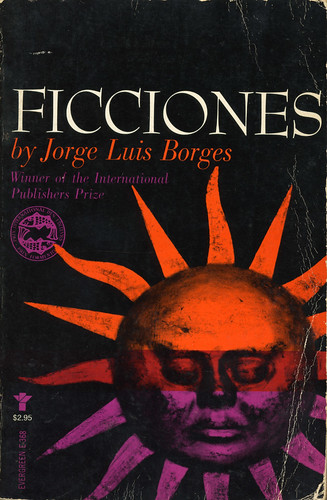
I mentioned in an earlier post that I'm rereading some selected Borges short fiction. Today I reread "The Approach to al-Mu'tasim," which is one of my favorites, and, I think, the quintessential Borges story. Borges once wrote that he saw no reason in writing a five-hundred page novel to express an idea that he could relate orally in five minutes. "The Approach to al-Mu'tasim" is an academic book review of a novel that doesn't exist, complete with footnotes, references to other works, and white-tower snootiness. The fictional novel, The Conversation with the Man Called Al-Mu'tasim: A Game of Shifting Mirrors, tells the story of a law student in Bombay who has rejected the old-school Islamic faith of his family. During a protest, the student murders (or thinks he has murdered) a Hindu. I'll let Borges take it from here:
The underlying plot is this: a man, the fugitive student freethinker we already know, falls among the lowest class of people and, in a kind of contest of evil-doing, takes up their ways. All at once, with the wonder and terror of Robinson Crusoe upon discovering the footprint of a man in the sand, he becomes aware of a sudden brief change in that world of ruthlessness - a certain tenderness, a moment of happiness, a forgiving silence in one of his loathsome companions. 'It was as though a stranger, a third and more subtle person, had entered into the conversation.' The hero knows that the scoundrel he is talking to is quite incapable of this unexpected turn; he therefore deduces that the man is echoing someone else, a friend, or the friend of a friend. Rethinking the problem, he arrives at the mysterious conclusion that 'somewhere on earth is a man from whom this light emanates; somewhere on earth a man exists who is equal to this light.' The student decides to spend his life in search of him.
The law student goes on an epic journey, looking for this man by observing reflections of his soul in others. More mindfuckery follows: al-Mu'tasim, the man the law student searches for, is in turn searching for someone else in the same fashion, and that someone searches for someone else. To complicate matters, there are two versions of the manuscript, and Borges has read only the inferior one, which strips it of its more literary qualities and paints on a thick layer of allegory. Then there's the comparison to The Conference of the Birds, a real book of poems by Farid ud-Din Attar, which takes on a similiar theme. All of this, by the way, is compressed into about five pages. Whoa.

Borges best work is all about his weird mysticism--antiquities, ancient labyrinths, smoke and mirrors, sorcerors and kings seeking answers to the mysteries of the universe--and metafiction. "The Approach to al-Mu'tasim" supplies both. Here's a link to the story.

This story was translated by Norman di Giovanni, a friend of Borges who has received flak for his occasionally questionable translations (although a friend who's read Borges in Spanish thinks his translations are fantastic) and his strained relationship with Maria Kodama, Borges's widow and executor of his literary estate. Due to some crazy fluke in the contract for the English language rights, Giovanni wound up with 50% of the royalties of the collected and selected works of Borges (most translators get either a tiny percentage or merely an advance with no royalties). According to Kodama, Giovanni, once a bosom buddy of Borges, has wound up stealing millions of dollars from her husband's estate. She also prevented reprints of almost a dozen books written by or about Borges, until recently, just because Giovanni had a hand in translating material for them. Oh literary drama. (You'll notice the link to "The Approach to al-Mu'tasim" leads to Giovanni's website.)

If you haven't read Borges, I highly recommend you check him out. Very good stuff.

Friday, August 21, 2009

Settling

Man, it's amazing what putting some furniture and posters up can do to a place. This is starting to feel less like an apartment where I sleep, eat, use the internet, and watch Lost, and more like a home.

The office, coming together.

Let me tell you the story of this desk. I contacted "Gabriel" on craigslist, who told us to come by and pick up the desk at 8:30. We arrived to find not Gabriel, but his two very confused (most probably stoned) roommates. They lived in a crappy, mostly empty college house that reminded me quite a bit of the one on Ellis Street. Their living room contained one falling-apart couch, a giant HDTV on a wooden stand, an XBox, and literally nothing else. The stoned roommates showed us into the basement, where Gabriel had disassembled and stored the desk, along with fifty or so years of cobwebs, mold, and mildew. We left our number on a sticky note, drove home, got a call from Gabriel, and drove back twenty minutes later to pick up the desk. Stupidly, we paid $45 for this. The picture probably makes it look better than it is. We had to wash the mold and mildew and crap off each piece before we assembled it (using only the pictures from craigslist and Gabriel's sometimes cryptic labels as a guide). The boards were slightly warped, the cabinet shakes, it's missing some screws, it reeks of basement, there's a rather large piece we couldn't find a place for and thus left out... it's a POS. But it's our desk, and I, if not Ashley, love it anyway.

I'm getting back into the writing mode. Unpacking all of my books and putting them up on shelves has something to do with it, I think. It's amazing how two months of summer can leave you so dumb and out of practice. I'm reading Creating the Story: Guides for Writers by Rebecca Rule and Susan Wheeler, who used to (and may still, I'm not sure) teach fiction at UNH. Donna gave me the book as a graduation present, and her name is on the inside cover. I'm also supplementing it with some old Borges short stories I haven't read since freshman year of college and the odd story from a Crab Creek Review or a MAR--unpacking everything I realized I've accumulated quite the library of old literary magazines.

Other than that, not much is happening. Still looking for a job, although it looks like I've got my work study taken care of--I'll be working in the HR department at UNH, doing office assistant stuff. Ashley's comp camp starts on Monday, and hopefully financial aid will drop soon, so I can pay off my credit cards, make a budget, and maybe even buy some more furniture (I'm pretty worried about money). I'll keep y'all posted.